Sandro Chia, born in Florence in 1946 under the name Alessandro Coticchia, studied at the Academy of Fine Arts in Florence He moved to Rome in 1970, exhibiting his first solo show in 1971 at the La Salita gallery Initially devoted to conceptual art after moving to Rome, the artist later embraced figurative art, becoming an exponent of the Transavantgarde movement Chia has devoted himself to both painting and sculpture, turning to the latter in 1982 He participated in the Venice Biennale in 1980, 1984, and 1989 His works are present in important Italian and international museums such as the Castello di Rivoli, the Guggenheim, and the Met in New York…
He currently lives between Miami, Rome, and Tuscany In 2003, three of his works entered the permanent collection of the Italian Senate at Palazzo Madama, while in 2005, the Province of Rome purchased two monumental sculptures
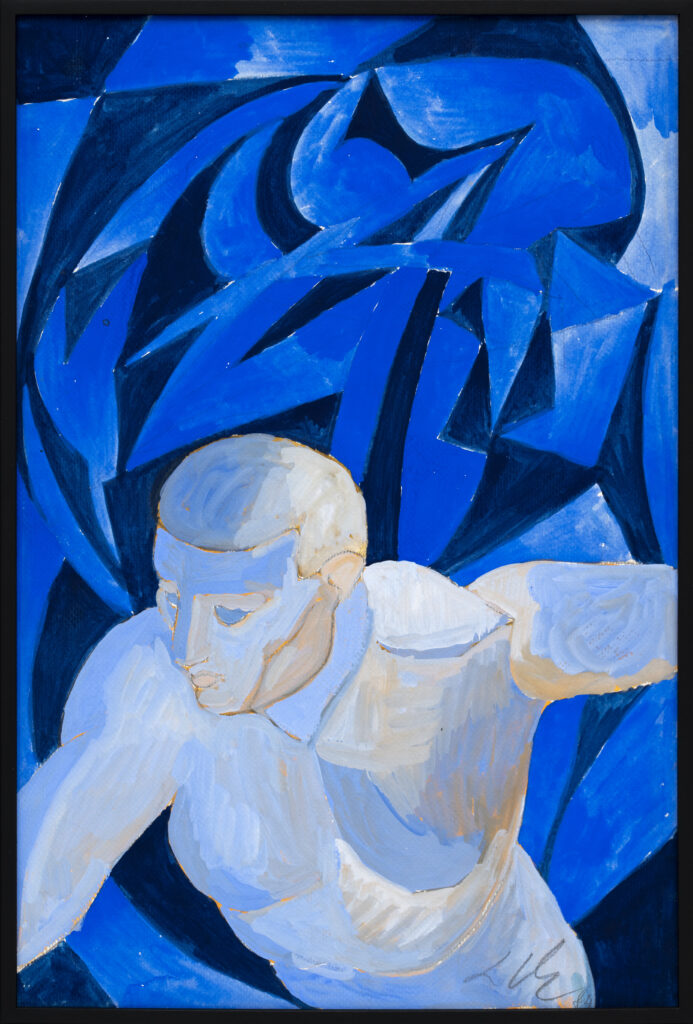
Throughout his artistic career, the human figure has taken on increasing importance, assuming hieratic proportions The characters, often humble, are presented by the artist as if they were mythological heroes Chia elevates these iconic figures to archetypes that confront the great masterpieces of the past, reworking them and bringing them into a personal, dreamlike, and sensual dimension These are well-defined characters with black outlines and powerful volumes, standing imposingly against vivid backgrounds that have no place and no time, perpetuating the feeling of being in front of a visionary dream made up of seemingly irreconcilable contrasts In particular, the artist’s works contain explicit references to the contrasts between the ancient and the contemporary, between the Apollonian and the Dionysian, between passion and rationality However, Chia constantly plays down the hero trope through the use of irony, the true glue between his paintings and sculptures
Chia looks closely at the masterpieces of artists of the past, including Titian, Masaccio, Tintoretto, Lorenzo Lotto, and Michelangelo, but also at contemporary examples such as Giorgio de Chirico, Fernand Léger, Paul Cézanne, Francis Picabia, and Marc Chagall Between the 1990s and 2000s, references to the past continued to be present in his works, particularly veering towards Braque or Picasso, but also references to the Futurism of Boccioni, Balla, and Depero, particularly evident in the dynamic backgrounds composed of blocks of bright colors


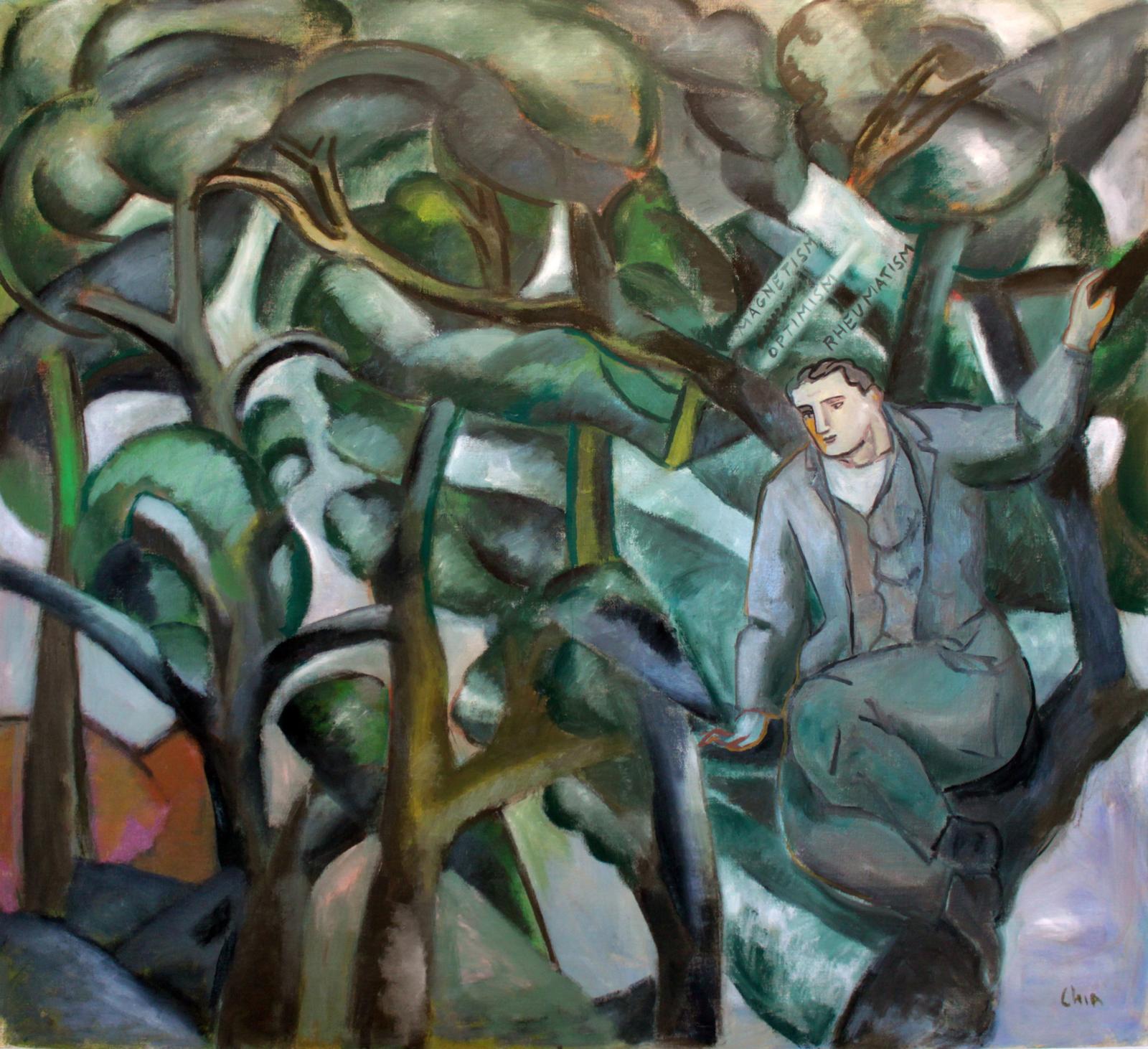 MAGNETISM, OPTIMISM, RHEUMATISM
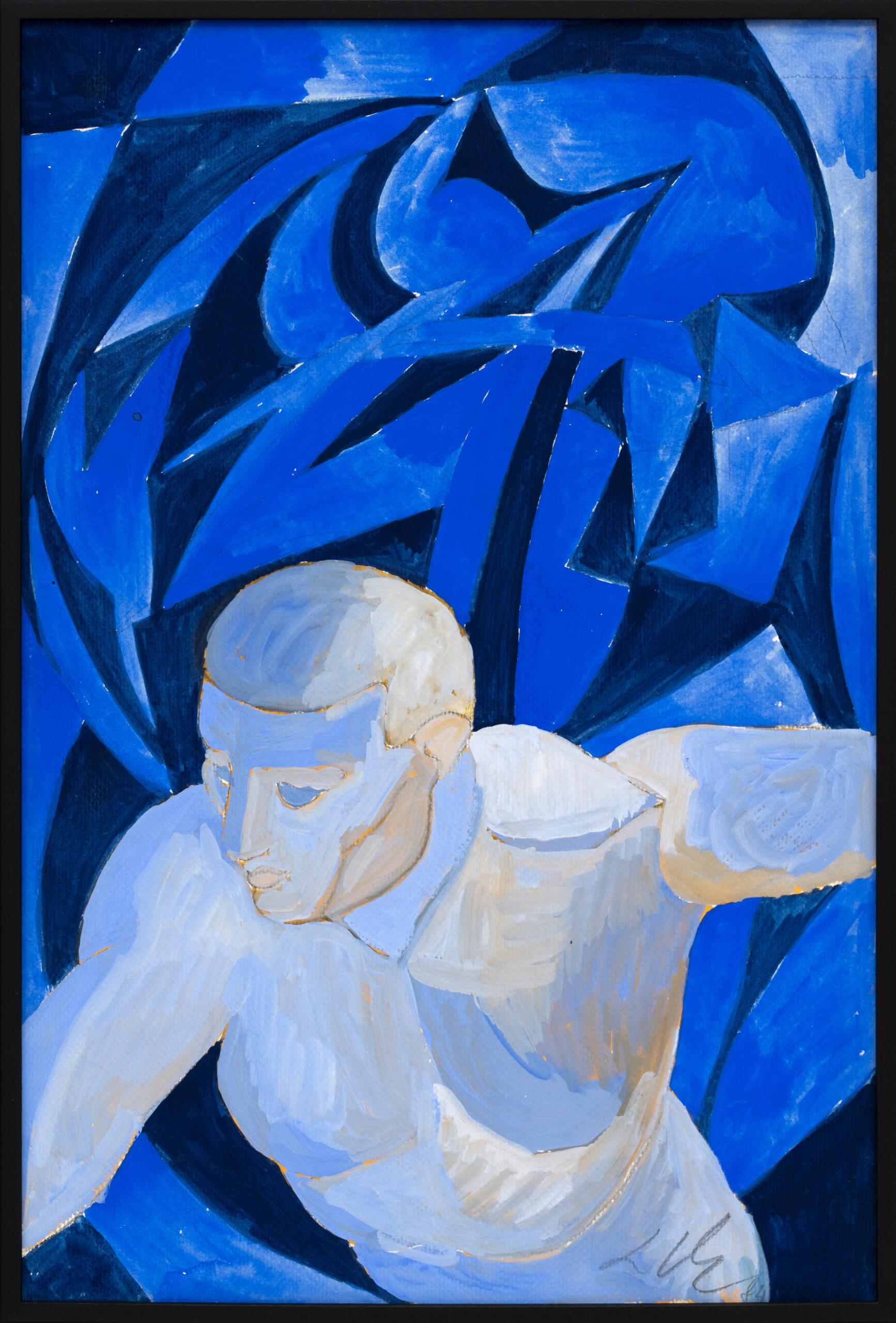 Untitled
