
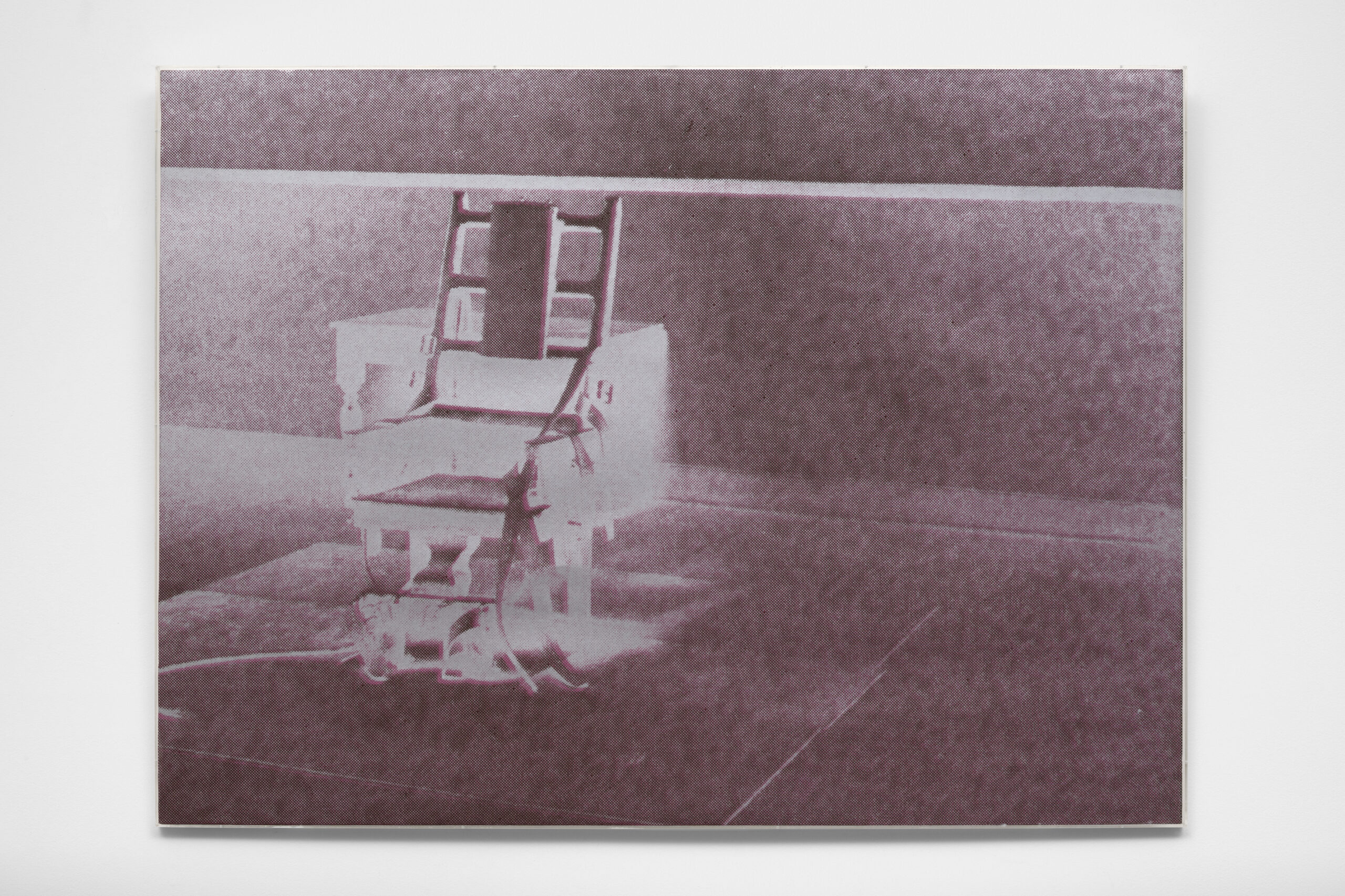
Silk-screen print on wove paper
cm 90×121
1971
NOTES: Signed, dated and numbered 230/250 on the back.
Certificate of authenticity and provenance from the Rosini Gutman collection N. NA W1553-21 signed Gianfranco Rosini.
PUBLICATIONS: F. Feldman and J. Schellmann, Andy Warhol Prints; Abbeville Press Publisher, New York 1985 (1st edition); pp. 47, ill. 78 (another illustrated copy); F. Feldman and J. Schellmann, Andy Warhol Prints; Abbeville Press Publisher, New York 1991 (2nd edition); pp. 51, ill. 78 (another illustrated copy); F. Feldman and J. Schellmann, Andy Warhol Prints: A Catalogue Raisonné 1962-1987, Art Publisher Inc. Association, New York 2003 (4th edition); pp. 79, ill. II.78 (another illustrated copy) N. Mattoscio; Warhol e Schifano Tra Pop Art e Classicismo, Museo Imago, Pescara 2021, op. pub. p. 19 and 93, ill. 43 M. Vanni, E. Zannella; Andy Warhol | Serial identity; exhibition catalogue at the MAGA Museum from 22/01 to 18/06/2023; Nomos Edizioni, Busto Arsizio, 2023; op. ill. p. 157.
Discover the video of the artwork (right-click on the link and select “open link in another browser window”) https://youtube.com/shorts/ZhqVCquYZ9Y?feature=share
This is the electric chair used to execute the Rosenbergs in New York in 1953. Accused, in the midst of the Cold War, of spying for the Soviet Union, their death was one of the most controversial legal cases of the entire 20th century. The press published a photo of the chair, which Andy Warhol then used starting in 1963—when the last death sentences were carried out in New York State—in various paintings and silkscreen prints. Warhol is best known for his vibrant images of iconic figures or consumer products, but he actually always had a keen interest in how the mass media used tragedies, numbing the viewer by endlessly repeating a shocking photo. Here, the empty chair, waiting for the victim, in a deserted room, with unsettling colors, becomes a memento mori, just as in traditional paintings the skull served to remind us of our human transience.