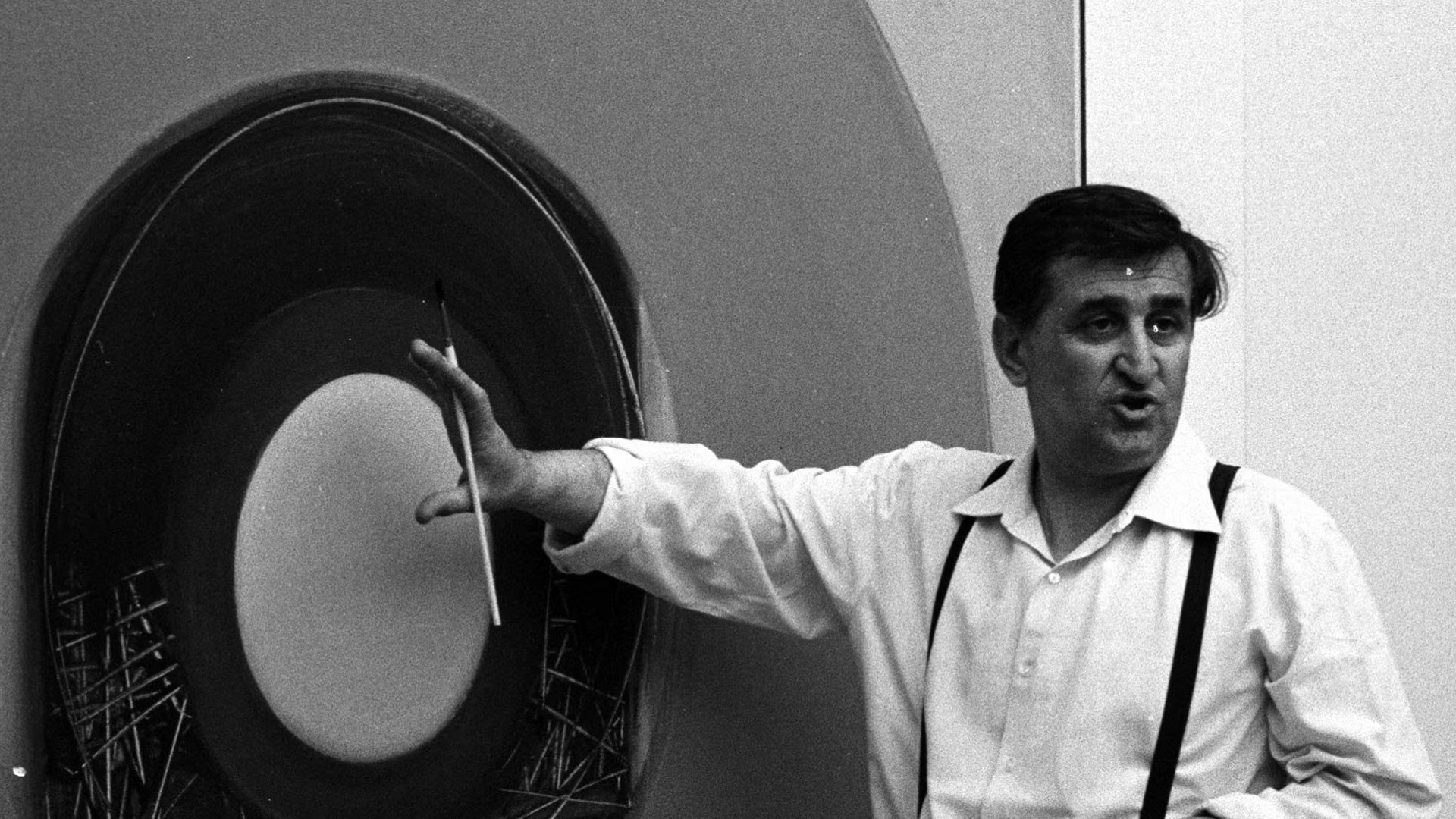
Emilio Scanavino, a painter and sculptor from Genoa, was born in 1922
In 1942, he enrolled in the School of Architecture at the University of Milan, but at the same time held his first solo exhibition at the Salone Romano in Genoa The outbreak of war forced him to abandon his studies and go to the front Upon returning home, he began working as a technical draftsman for the Genoa city government and became part of the climate of cultural and artistic renewal in his city Meanwhile, he continued his artistic work, producing a series of canvases featuring stylistic elements of Expressionism In 1947, Scanavino traveled to Paris for the first time, where he stayed for a while and, in addition to critics, met poets and artists such as Edouard Jaguer, Wols, and Camille Bryen…
His experience in Paris would prove fundamental to his stylistic development, particularly due to the influence that Post-Cubism—reinterpreted in his own personal way—would have on his subsequent work
In 1950, he exhibited at the 25th Venice Biennale (where he would return several times), attracting critical attention The following year, he held a solo exhibition at the Apollinaire Gallery in London, where he met Philip Martin, Eduardo Paolozzi, and Francis Bacon
Upon returning to Italy, he moved to Albisola for a time to attend Tullio d’Albisola’s ceramics workshop There he met and befriended Fontana, D’Angelo, Baj, Dova, Crippa, Jorn, Appel, and Corneille of the Cobra group, as well as Matta and Lam
The 1950s were marked by his growing affinity with the Milanese Spaziali group, though he never formally joined it During these years, Scanavino also traveled frequently between London and Paris It was during this period that he created his first Rituali and Alfabeti senza fine – recurring themes in Scanavino’s painting, where the mark takes center stage on a canvas of solids and voids filled with evocative presences
The Venice Biennale invited him again in 1958, and in 1960 and 1966 he was granted a solo exhibition space
In 1971, he moved to Rome for a time and was invited to the São Paulo Biennial in Brazil alongside Alik Cavaliere; the two artists created the installation Omaggio all’America Latina (Homage to Latin America), dedicated to the martyrs for the freedom of the Latin American peoples
Throughout the 1970s, Scanavino’s style became simpler and coalesced into grids or geometric structures, foreshadowing a reflection on the objectification of painting
In 1973, the Kunsthalle in Darmstadt dedicated a vast and comprehensive retrospective to him, which was also exhibited in Venice at Palazzo Grassi and in Milan at Palazzo Reale
The artist died in Milan in 1986
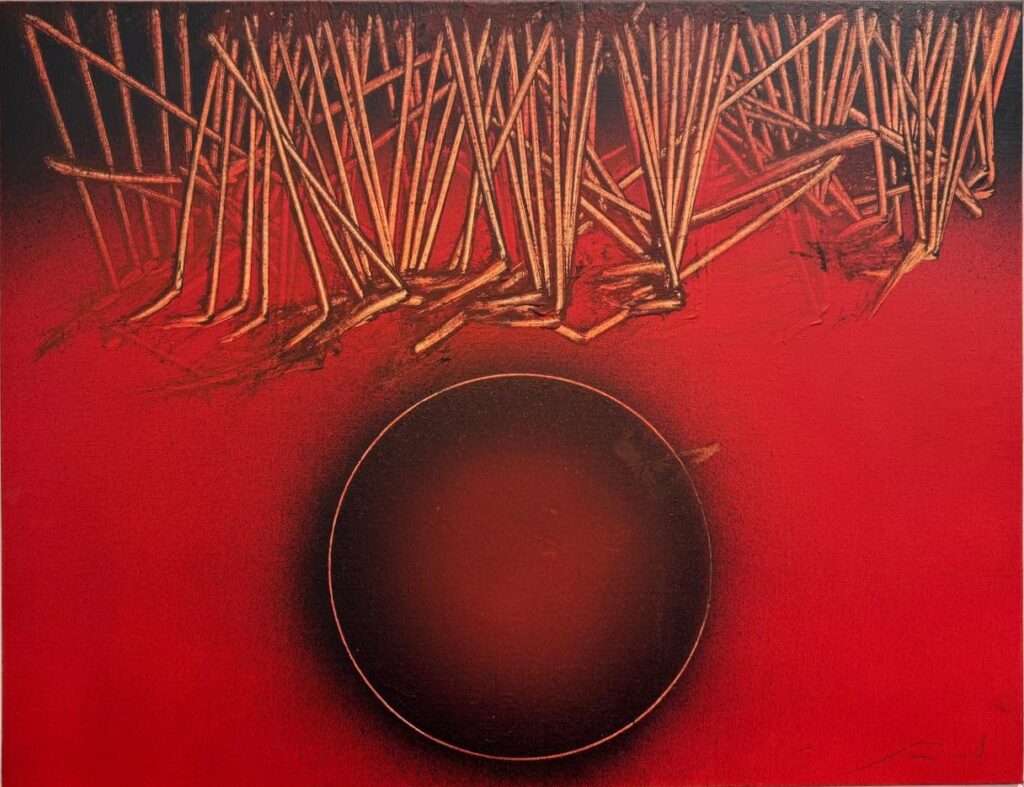
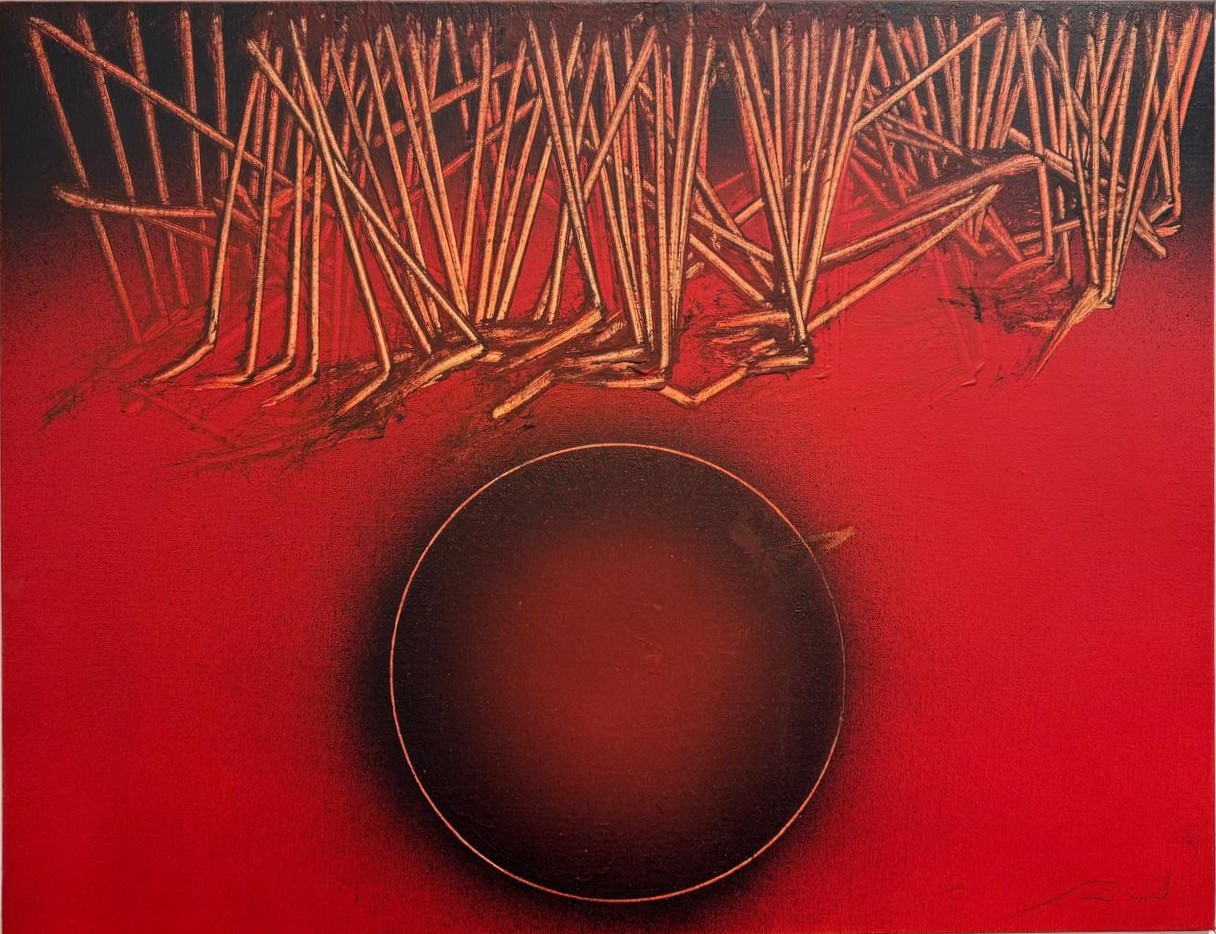 Il grande sole