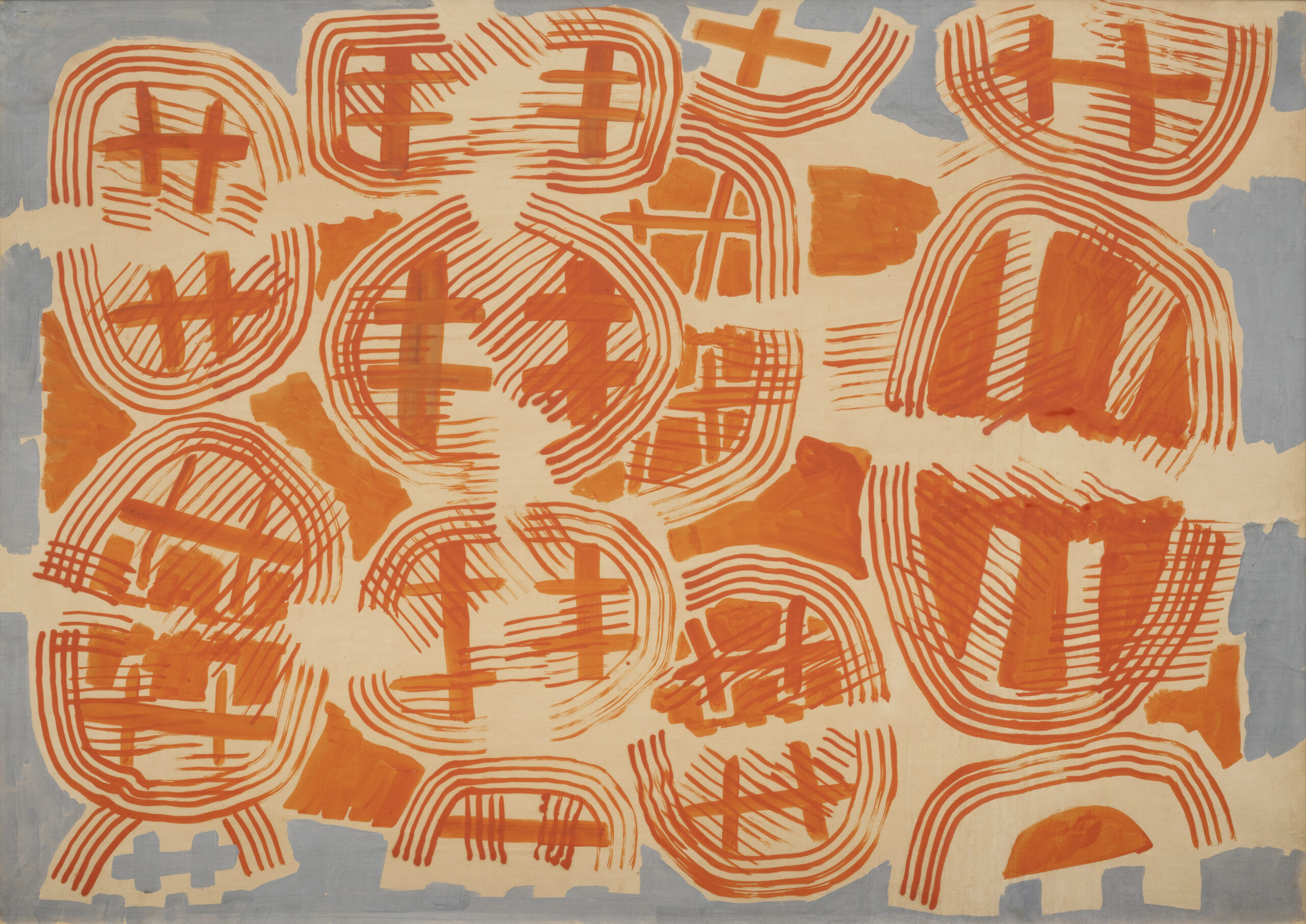
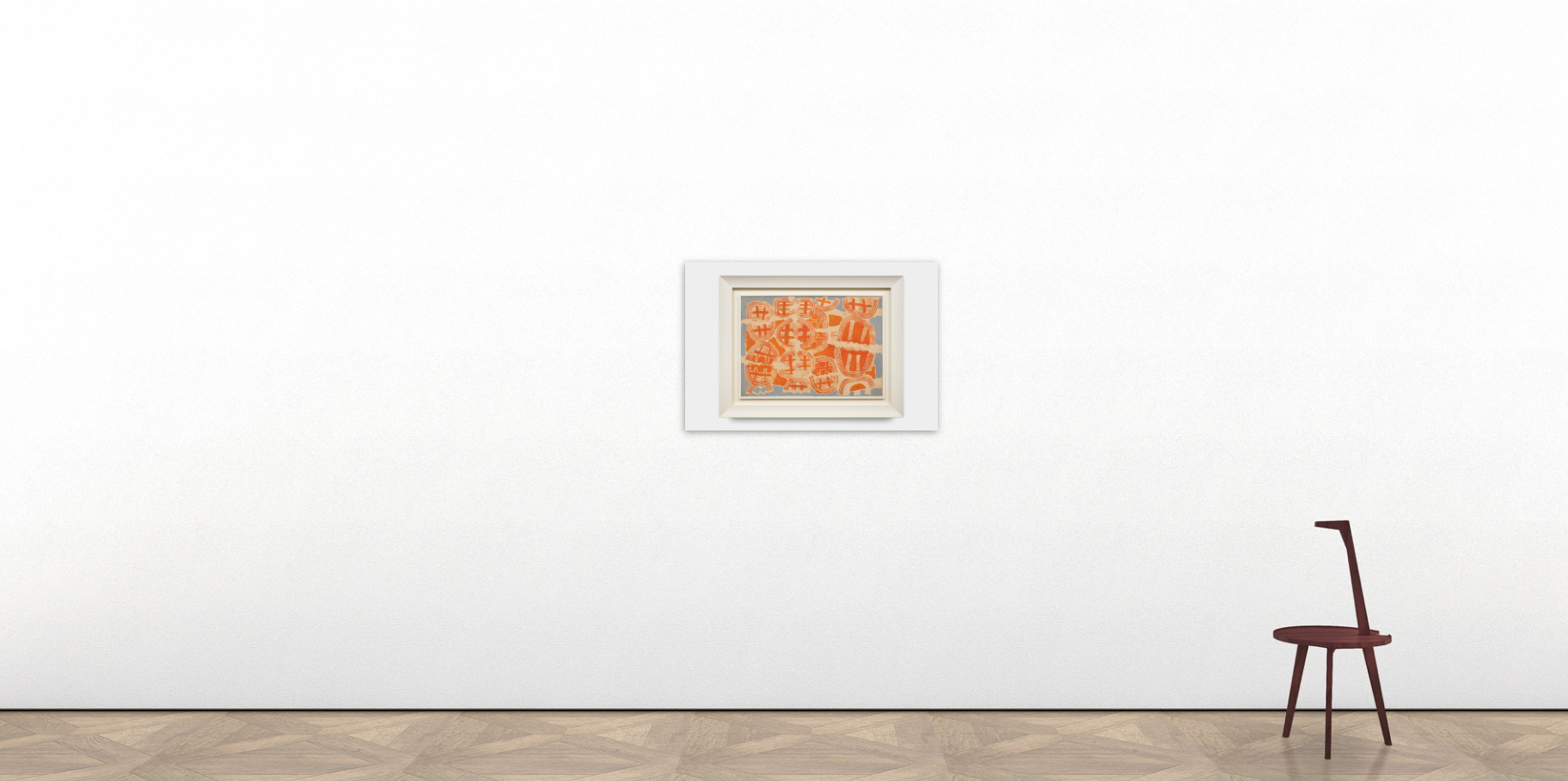
tempera on canvas-lined paper
cm 71×100
1954
NOTES: Titled and dated on the back;
PUBLICATIONS: G.C. Argan, Capogrossi, Editalia, Rome, 1967, Part II, n. 32;
PROVENANCE: Private collection, Rome.
Discover the video of the artwork (right-click on the link and select “open link in another browser window”) https://youtube.com/shorts/fuIxUngv9-o
“One day I went with my mother to an institute for the blind. In one room there were two children drawing. I approached them: the sheets of paper were covered with small black marks, a sort of mysterious alphabet… I felt deeply moved. From that moment I understood that marks are not necessarily the image of something we can see, but can express something that is inside us.” After beginning with a style of painting that hovered between the physical and the metaphysical, in the post-war period Capogrossi’s work gradually moved away from figuration until it reached complete abstraction.
Capogrossi invented an elementary and highly communicative graphic sign, which is repeated in the most diverse combinations. This primary element, often called a comb or fork, is always associated with flat colour backgrounds. The signs are freed from any supporting structure; the work is the result of their process of aggregation. The name “Superficie” followed by a sequential number is the title of all the works on canvas. This is Superficie 710: the space of the work and the work itself are one and the same, what changes is the way the signs intersect, and the colours, here a blue, a sand and an orange of great elegance, seem to embrace each other.